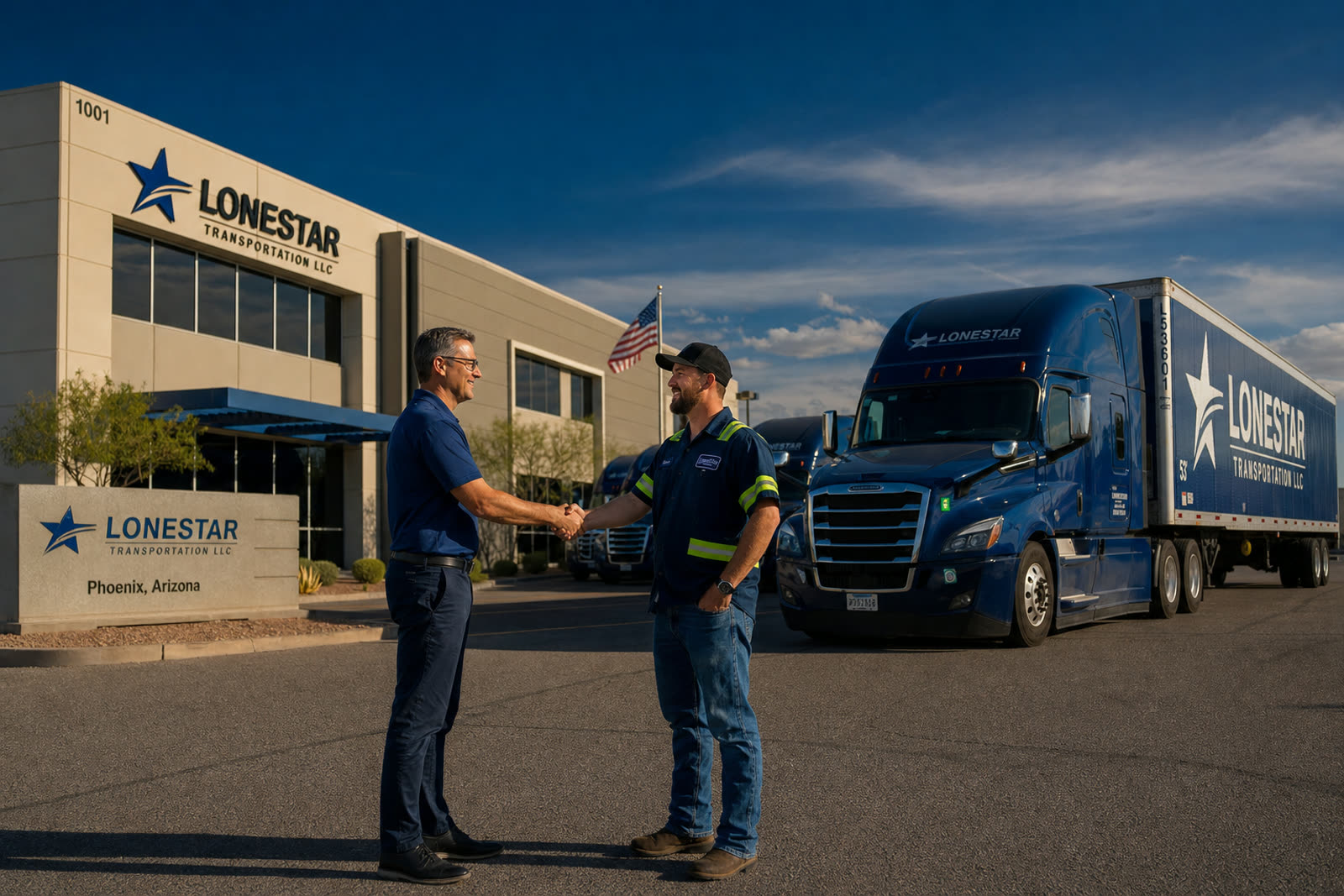
Protection for the incidents that happen away from the truck — at your yard, in a warehouse, or from products and completed operations.
Your auto liability policy covers incidents involving the truck on the road. General liability covers everything else — a visitor injured at your yard, damage caused loading or unloading at a customer's dock, or a products/completed operations claim tied to your business operations.
It's not a coverage FMCSA requires the way it requires auto liability, but nearly every broker, shipper, and warehouse now requires proof of general liability before they'll let a driver on the property — often through a certificate of insurance naming them as an additional insured.
$1,000,000 per occurrence and $2,000,000 aggregate is the standard limit most contracts and lease agreements ask for. Fleets with more customer-facing exposure, or those that lease space at multiple terminals, sometimes carry higher limits or layer excess coverage on top.
Premium is driven by your operations, payroll, number of trucks, and whether you have any warehousing, cross-docking, or loading/unloading exposure beyond just point-to-point hauling.
General liability is not a coverage FMCSA requires by federal regulation; it is commonly required contractually by brokers, shippers, and facility owners.
Many owner-operators still carry it because brokers and shippers now require a GL certificate as a condition of doing business, even without a fixed facility.
No. Cargo and auto liability are separate policies. General liability specifically excludes automobile-related claims, which is why trucking businesses carry all three together.
Sometimes, depending on the carrier and your operation, but they're always distinct coverage parts even when packaged together on one policy.
Call or text 480.789.1844 to get GL quoted alongside your auto and cargo coverage.